
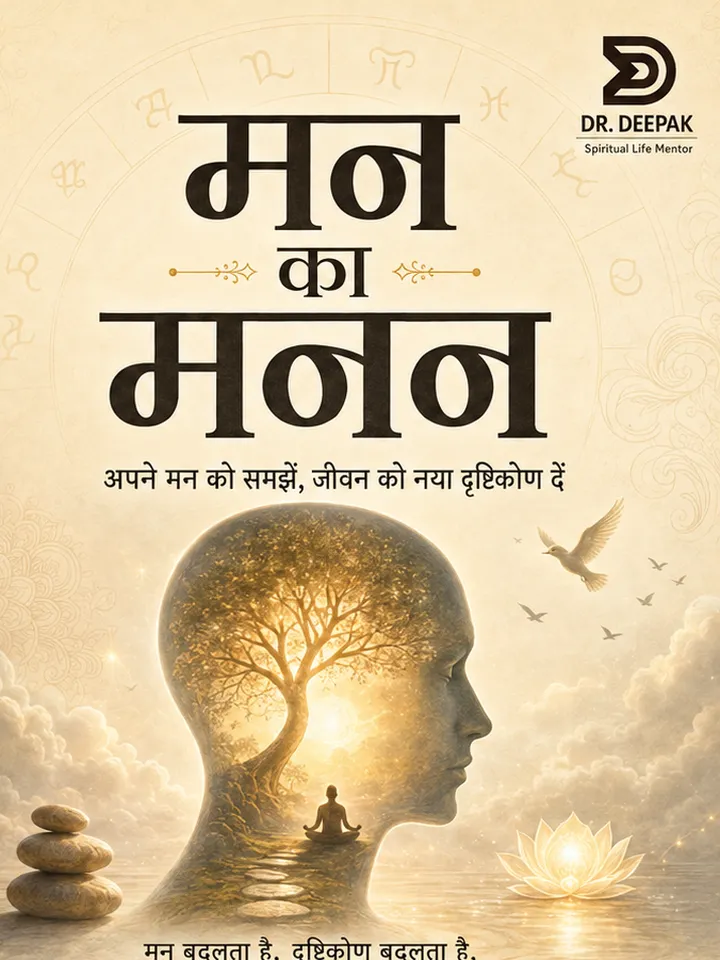
"Manan" gets translated loosely as "thinking about," but that misses what makes it useful. Manan is not the looping, anxious replay most of us call overthinking. It is closer to the opposite — a deliberate, quieter kind of attention where you observe a thought or emotion instead of being completely fused with it.
Overthinking vs. manan
Overthinking keeps you inside the thought, running the same worry on repeat, usually without any new insight arriving. Manan asks you to take one small step back — to notice "I am having this thought" or "I am feeling this reaction" rather than simply being it. That single shift, from being the thought to observing the thought, is where most of the practical benefit of this practice actually lives.
Why the mind needs this kind of attention
Left unexamined, the mind runs mostly on old patterns — habits of reacting formed years or decades ago, often without our conscious agreement. Fear responses, self-doubt, the specific way a person shuts down in conflict — these rarely start where they show up. Manan doesn't try to erase these patterns overnight. It builds the one capacity that makes changing them possible at all: the ability to notice a pattern while it's happening, instead of only recognising it afterward.
A simple way to begin
- Name it, don't just feel it. When a strong emotion or reactive thought shows up, silently name it — "this is anxiety," "this is the old fear of being judged." Naming creates the small gap manan depends on.
- Ask one honest question. "Is this reaction about what's happening right now, or about something older?" You don't need a full answer immediately — the question itself starts loosening the pattern's grip.
- Give it five quiet minutes. Not to solve anything — just to sit with a thought or feeling without acting on it or arguing with it. Most people are surprised how much clarity arrives simply from not reacting immediately.
What changes with practice
This isn't about becoming emotionless or endlessly calm — that isn't the goal and it isn't realistic. What actually changes is the space between a trigger and a response. That space is small at first, sometimes barely a breath. But it's real, and it's exactly where better decisions, calmer relationships and a steadier sense of self all get built — mann badalta hai, drishtikon badalta hai; drishtikon badalta hai, jeevan badalta hai.
Where this fits with everything else
Manan is not a replacement for addressing real external problems, and it's not in competition with the Vedic or spiritual tools discussed elsewhere on this blog. It's the foundation underneath all of them — because a mind that can observe itself clearly is simply better equipped to use any remedy, any timing, any guidance well.