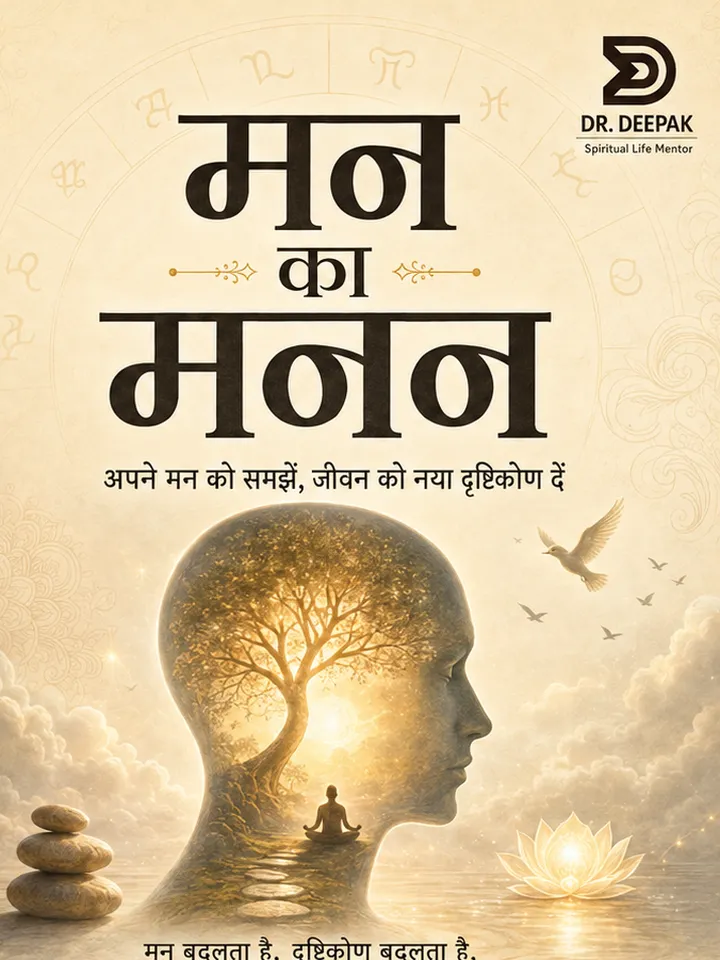

Few combinations in astrology get talked about as much — or as loosely — as Gajkesari Yoga. People hear the name and expect something dramatic: sudden fame, sudden wealth, sudden ease. The reality is quieter and, if you actually understand it, far more useful.
What Gajkesari Yoga actually is
Gajkesari Yoga forms from the auspicious relationship between Guru (Jupiter) and Chandra (Moon) — traditionally when Jupiter sits in a kendra (angular house) from the Moon. Jupiter represents wisdom, expansion and good judgement. The Moon represents the mind, emotional steadiness and how we process our inner world. When these two are well placed relative to each other, the yoga's classical promise is exactly what you'd expect from that combination: mental balance, sound decision-making, social respect and a kind of steady, growing confidence — not a lottery win.
Natal yoga vs. gochar activation
Having Gajkesari Yoga in your birth chart is only half the story. The more practical question — the one this book is actually about — is when this yoga activates in gochar (transit). A yoga that exists on paper in your natal chart can sit quiet for years and then switch on strongly when Jupiter's current transit position recreates that same angular relationship with your natal or transiting Moon. That activation window is when its effects are genuinely felt in day-to-day life: clearer thinking, better opportunities showing up, more social goodwill, decisions that seem to land more easily.
What strengthens it, what weakens it
Like any yoga, Gajkesari doesn't operate in isolation. Its strength in gochar depends on: the dignity of Jupiter and the Moon in the transit chart, whether either planet is combust or afflicted by a malefic transit at the same time, and how this transit interacts with the person's Mahadasha/Antardasha period. A textbook-strong Gajkesari transit landing during a genuinely difficult dasha period will still soften the difficulty — it rarely erases it. This is precisely the kind of nuance that gets lost when the yoga is talked about only by its name.
What it does not mean
It does not mean immunity from effort. It does not mean every decision made during this window is automatically correct. And it is not a substitute for actually doing the work — career decisions, relationship conversations, health choices — that the period is simply making a little easier to navigate well. Read as a support, not a guarantee, it becomes genuinely useful. Read as a guarantee, it sets people up for disappointment that has nothing to do with the astrology and everything to do with the expectation.
This is the difference this book tries to make — moving Gajkesari Yoga from a phrase people repeat to something they can actually recognise and use, in gochar, in their own chart, in real time.